Health · June 29, 2026
Zyn Brain Fog & Anxiety: Why It Happens
Zyn can cause brain fog and anxiety — both while you use it and when you quit. Here's why nicotine clouds your focus and mood, and how long the fog lasts.

Short answer: yes — Zyn can fog your thinking and ramp up anxiety, and it cuts both ways. Nicotine messes with focus and mood while you're using it, and quitting brings a temporary fog of its own. The good news is the second kind is short-lived. Here's what's actually happening.
Brain fog while you're using Zyn
It feels like pouches help you focus — and for a few minutes after one, they do. The catch is the cycle:
- Spike, then crash. Nicotine gives a short hit of alertness, then levels drop and focus dips below where you started — until the next pouch. If you're a regular user, a lot of your day is spent in that low part of the curve, which reads as brain fog.
- You're chasing baseline, not a boost. Once you're dependent, a pouch mostly just returns you to normal. The "clarity" is relief from mild withdrawal, not a real cognitive lift.
So the fog you feel between pouches isn't a focus problem — it's the habit quietly setting the floor lower.
Pouch Buddy
Not sure how much you're actually using?
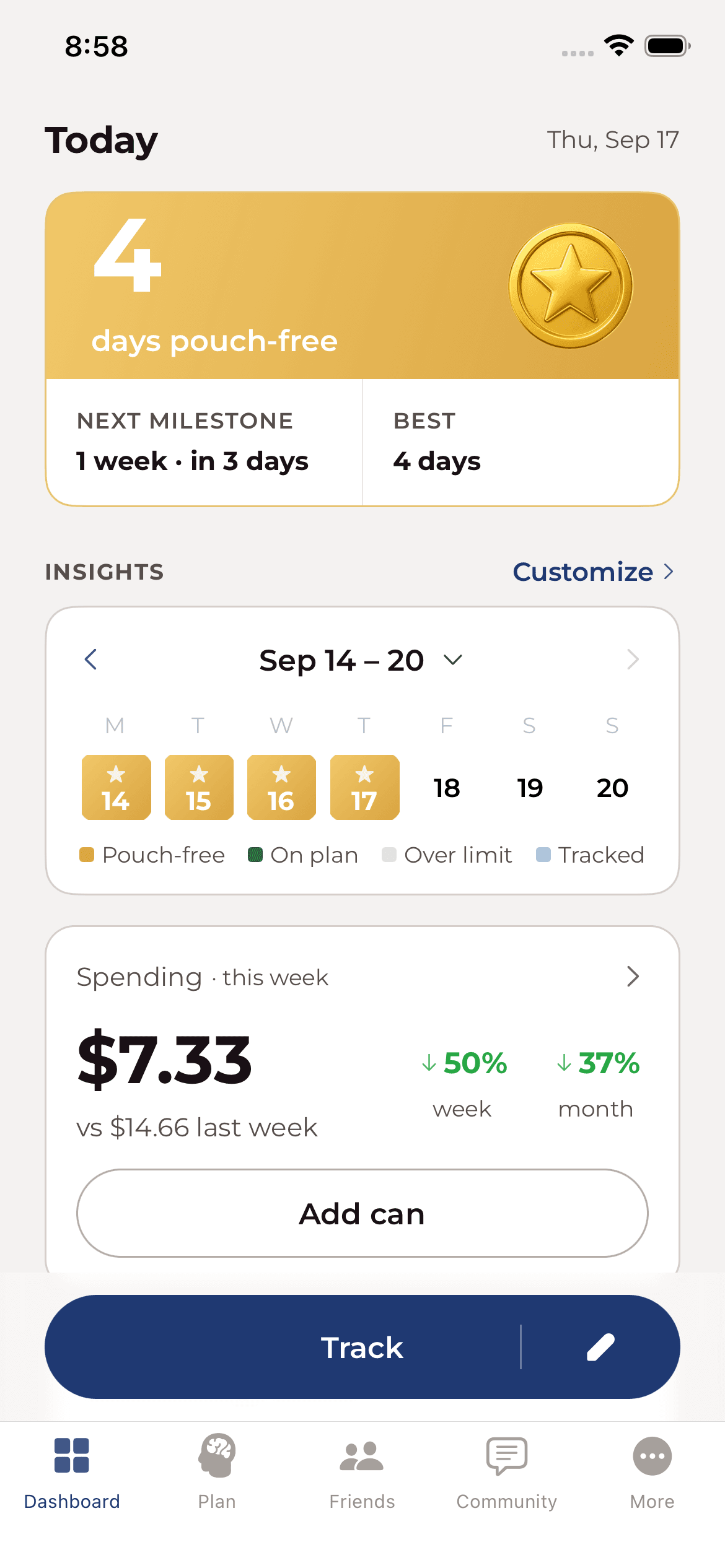
PouchBuddy counts every pouch and shows your daily nicotine intake at a glance.
The nicotine–anxiety loop
This one surprises people: nicotine feels calming in the moment but raises your baseline anxiety over time. Each pouch soothes a craving, which feels like stress relief — but as it wears off, low-level withdrawal nudges anxiety up, so you reach for another. Over weeks, that can leave you more anxious overall than before you started. You're not imagining it, and you're not weak — it's the chemistry of the loop. (The physical side of that loop — a racing or pounding heart — is real too: here's what Zyn does to your heart.)
Brain fog and anxiety when you quit
When you stop, your brain is briefly short on the nicotine it adapted to, and fog, poor concentration, irritability, and anxiety are normal withdrawal symptoms. They peak in the first 2–3 days and ease over about two weeks as your receptors readjust. It's the same arc as the rest of Zyn withdrawal — temporary, and a sign your brain is recalibrating, not breaking.
The payoff: once that window passes, most people report steadier focus and lower baseline anxiety than when they were using — because the spike-crash-withdrawal loop is gone. (More on what improves and when.)
How to clear the fog faster
- Hydrate and sleep. Both blunt withdrawal fog more than people expect.
- Move. A short walk reliably lifts focus and anxiety in the moment.
- Lower your dose if you're cutting down rather than stopping — a 6 mg → 3 mg step eases the spike-crash swing.
- Ride out cravings. Each one passes in minutes; here are practical craving tactics and ways to handle withdrawal.
- Remember it's temporary. The fog and anxiety of quitting fade; the loop they come from doesn't end until you do.
When to talk to someone
Temporary fog and jitters are expected. But if anxiety is severe, persistent, or comes with panic, low mood you can't shake, or thoughts of self-harm, talk to a doctor or mental-health professional — quitting nicotine shouldn't mean white-knuckling a serious mental-health issue alone.
The bottom line
Zyn drives brain fog and anxiety from both directions — the spike-crash cycle while you use it, and a short withdrawal fog when you stop. The using kind is permanent as long as the habit is; the quitting kind is temporary and clears in about two weeks, leaving most people sharper and calmer. Here's quitting Zyn and the full withdrawal timeline.
This article is general information, not medical advice. Talk to a doctor about anxiety, mood, or your nicotine use.