Health · April 27, 2026
Are Nicotine Pouches Bad for You?
What the FDA and health experts actually say about nicotine pouches like Zyn — the real risks to your heart, gums, and more, plus how to cut back.

If you've been using Zyn, Velo, or another nicotine pouch and a quiet voice keeps asking "is this actually bad for me?" — you're asking the right question. Here's the honest, evidence-based answer, without the scare tactics or the marketing spin.
The short version: nicotine pouches are almost certainly less harmful than cigarettes because there's no smoke and no tobacco leaf — but "less harmful than the worst option" is not the same as "safe." They still deliver a highly addictive drug, their long-term effects haven't been studied yet, and the only way to remove the risk entirely is to stop.
What nicotine pouches actually are
A nicotine pouch is a small, tobacco-leaf-free pouch you tuck between your gum and lip. Inside is nicotine (synthetic or extracted from tobacco), plus flavorings, sweeteners, and plant-based fillers. Because there's no combustion and no tobacco leaf, you avoid the tar and many of the carcinogens that make cigarettes and traditional dip so dangerous.
That's the genuinely good news. The catch is everything that nicotine itself does to your body — and the fact that these products are new enough that nobody has decades of safety data on them.
Didn't the FDA approve them?
This is the most misunderstood part, so it's worth getting right.
In January 2025, the FDA authorized the marketing of 20 Zyn nicotine pouch products — the first time it cleared products in this category. In its decision, the FDA said the authorization was "appropriate for the protection of public health," largely because the data showed adults using Zyn were mostly switching away from cigarettes, and pouches expose users to fewer harmful chemicals than smoking.
But read the fine print, because it matters:
- "Authorized" is not "approved as safe." The FDA was explicit that these products are not safe, and the authorization does not allow the company to advertise them as lower-risk. (A separate "modified risk" review is still ongoing.)
- They are not an FDA-approved way to quit. Unlike nicotine gum or patches (which are approved cessation aids), pouches haven't been authorized to help you quit.
- The FDA also stressed the real danger to young people and non-users, for whom there's no upside — only a new nicotine addiction.
So: legal to sell, reviewed by the FDA, lower-exposure than cigarettes — and still not something any health authority calls "good for you."
Pouch Buddy
Ready to take back control?
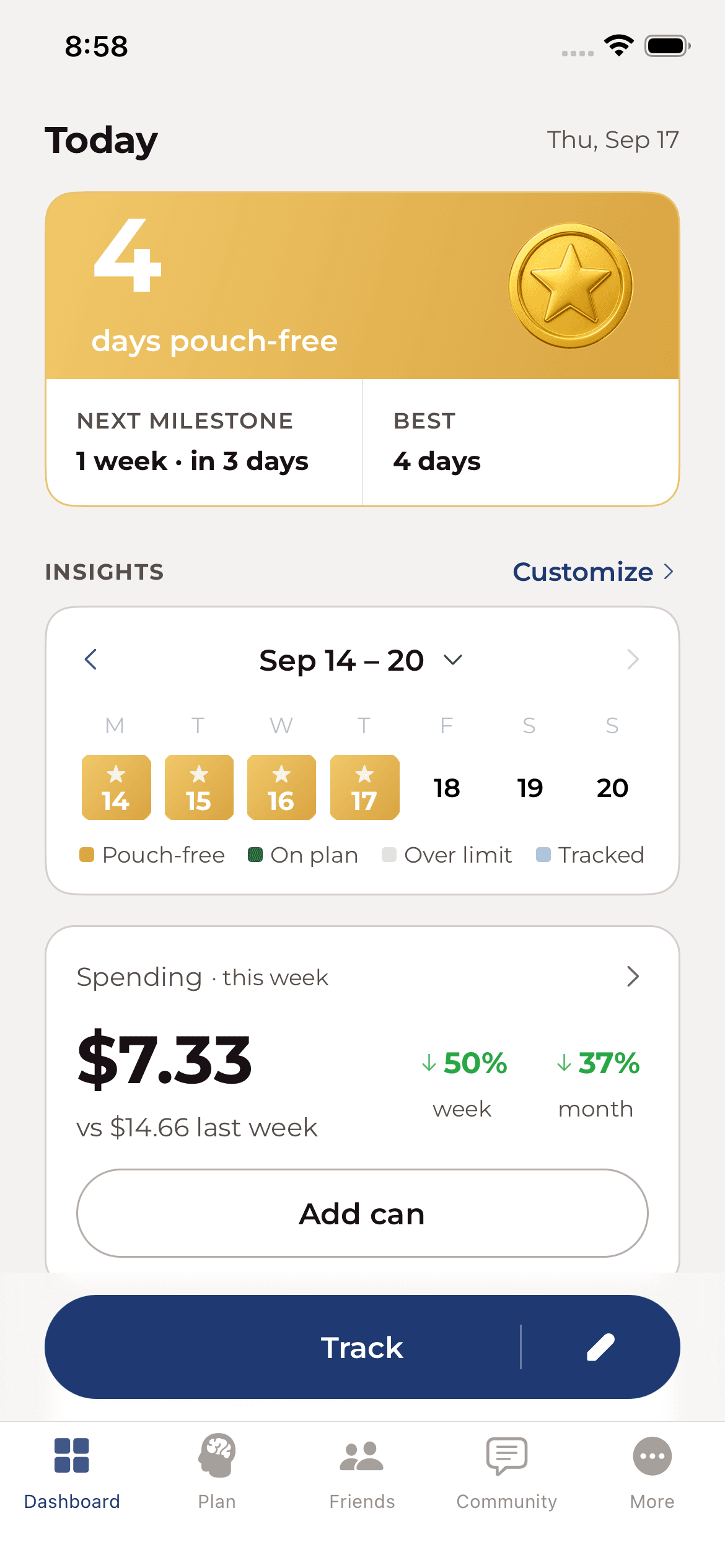
Track every pouch, set a daily limit, and cut back with friends.
Are nicotine pouches bad for your heart?
Nicotine is a stimulant, and your cardiovascular system feels it. According to the American Heart Association, nicotine raises your blood pressure and heart rate and can narrow and harden your arteries — the kind of strain that, over time, is associated with heart attacks. Studies measuring pouch use specifically have found heart rate climbs noticeably with higher-strength (20–30 mg) pouches.
This is a big deal with pouches because many of them are stronger than people realize — some deliver as much nicotine as, or more than, a cigarette. More nicotine means more cardiovascular load and a tighter grip of addiction.
Are they bad for your gums and mouth?
This is where pouches show their most common, visible downside. Holding a concentrated dose of nicotine and flavorings against your gum line can cause gum irritation, soreness, and — for some users — gum recession where the pouch sits. A dental review of the evidence notes irritation is frequently reported, while also being honest that there's very little long-term data yet on what daily pouch use does to oral health over years.
Do nicotine pouches cause cancer?
Here's the careful, accurate answer: there is no long-term evidence that nicotine pouches cause cancer, and they lack the tobacco leaf and combustion that drive most tobacco-related cancers — which is why experts generally consider their cancer risk far lower than smoking or traditional dip/snus.
That is not a clean bill of health. These products are too new for long-term cancer studies to exist, and "no evidence of harm yet" is not the same as "proven safe." Nicotine itself isn't classified as a carcinogen, but it's far from harmless. The honest takeaway: likely much lower cancer risk than cigarettes, unknown over decades, and zero is still the only number with no risk.
The part the flavors hide: addiction
Everything above is secondary to the main event — nicotine is one of the most addictive substances there is. The high strength of modern pouches, the pleasant flavors, and how easy they are to use all the time (no smoke, no spit, no one notices) make them exceptionally easy to use more than you mean to. Most people genuinely don't know how many they go through in a day until they start counting.
Pouch Buddy
Ready to take back control?
Track every pouch, set a daily limit, and cut back with friends.
The bottom line
If you're choosing between cigarettes and pouches, the evidence says pouches are the lower-harm option. But if the question is "are these bad for me?" — the answer is that they carry real, ongoing risks (cardiovascular strain, gum damage, and a powerful addiction), with long-term effects still unknown. The only way to eliminate the risk is to stop.
If you're not ready to quit outright, the next best thing is to take back control of how much you use — see your real daily count, set a limit, and step it down over time. That awareness is usually the turning point.
That's exactly what PouchBuddy is built for: track every pouch, set a daily limit, and cut back at your own pace — with friends keeping you motivated. If you're ready to start, here's how people are quitting nicotine pouches for good, and some practical ways to ride out cravings. Still weighing it up? See what's actually in a Zyn pouch, how Zyn compares to vaping, and what happens if you swallow one.
This article is for general information and isn't medical advice. Talk to a doctor or pharmacist about your nicotine use and the options that fit your health.
Sources
- FDA — FDA Authorizes Marketing of 20 ZYN Nicotine Pouch Products
- American Heart Association — The Hidden Dangers of E-Cigarettes, Oral Nicotine Pouches and Heat-Not-Burn Products
- American Lung Association — The Severe Dangers of Nicotine Biohacking
- British Dental Journal — Nicotine pouches: a review for the dental team
- Nicotine delivery and acute effects after use of tobacco-free nicotine pouches